05 de maio de 2026
Share
IDS Debates eSports and Intellectual Property in a Special Edition of Agenda IDS for World IP Day
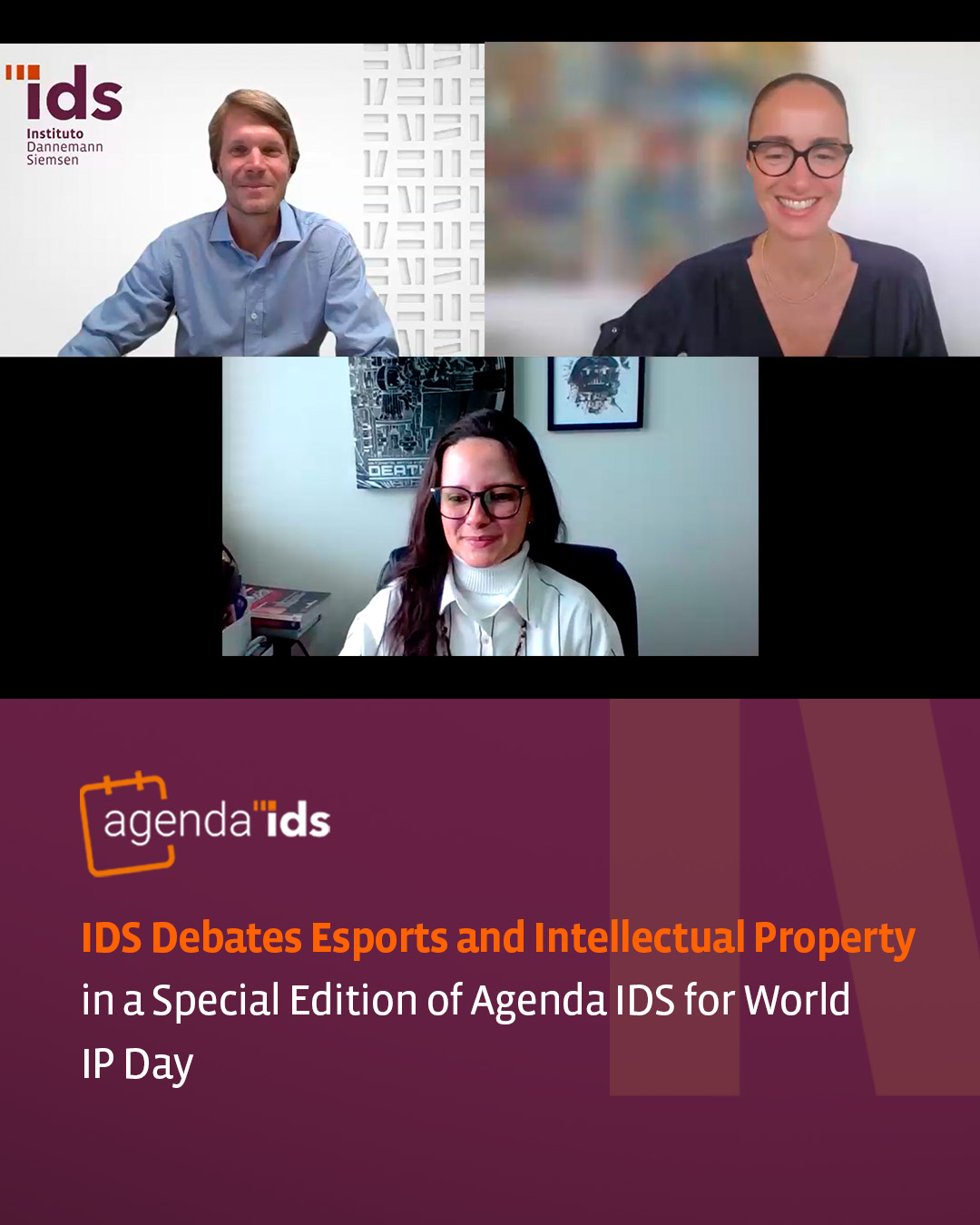
On April 28, the Dannemann Siemsen Institute (IDS) held a special edition of Agenda IDS in celebration of World Intellectual Property Day. In line with the theme defined by the World Intellectual Property Organization (WIPO) for 2026 — Intellectual Property and Sports — the event discussed how legal instruments in this field structure the business models of eSports organizations.
The event was moderated by Felipe Dannemann Lundgren, member of the IDS Board and partner at Dannemann Siemsen, and featured Roberta Coelho, CEO of MIBR, a well-established organization in the eSports sector, and Dr. Layla Rodrigues, a lawyer specializing in labor and consumer law, with a focus on the protection of users and athletes in this sector.
In his opening remarks, Felipe highlighted that eSports are highly dependent on intellectual property (IP) frameworks, which underpin both commercial exploitation and legal certainty in the sector. In this context, he presented an overview of the main mechanisms applicable to the industry: copyright covering games and their elements; trademarks for the identification of teams and events; patents and industrial designs related to technologies and equipment; as well as image rights and trade secrets.
From a practical perspective, Roberta Coelho explained that eSports organizations operate as structured companies, with multiple departments — from marketing to legal — and an international presence. When addressing revenue streams, she highlighted three main fronts related to the competitive environment: prize money; league-based revenue sharing tied to engagement and performance; and digital assets, such as in-game items, the commercialization of which depends on authorization from publishers. She also pointed to the relevance of non-competitive revenues, such as sponsorships, audience monetization, and player transfers. In addition, she emphasized the strategic importance of the international market — particularly China — in the commercialization of digital assets.
From a legal standpoint, Dr. Layla Rodrigues identified as the main challenge the dependence of organizations on publishers, which hold the copyright and may change rules or terminate leagues. She also pointed to other sources of legal uncertainty, such as the lack of specific legislation for eSports, the concentration of broadcasting rights, the impacts of artificial intelligence — particularly regarding the unauthorized use of players’ image and voice — and the complexities surrounding betting and mechanisms such as loot boxes.
With respect to IP asset management, Roberta emphasized the central role of trademarks, registered across different jurisdictions, as a basis for sponsorship and licensing agreements. Regarding athletes, she explained that the use of image rights follows parameters similar to those of traditional sports, with specific restrictions for advertising campaigns involving sponsors.
Finally, from a contractual perspective, Layla highlighted key provisions for risk mitigation, including clauses addressing the use of image — including after the termination of the relationship — mechanisms to protect the team’s reputation, and rules governing athletes’ individual activities, such as personal streaming, in order to avoid conflicts with the organization’s sponsors.
The recording of the event will be made available shortly on the IDS website.